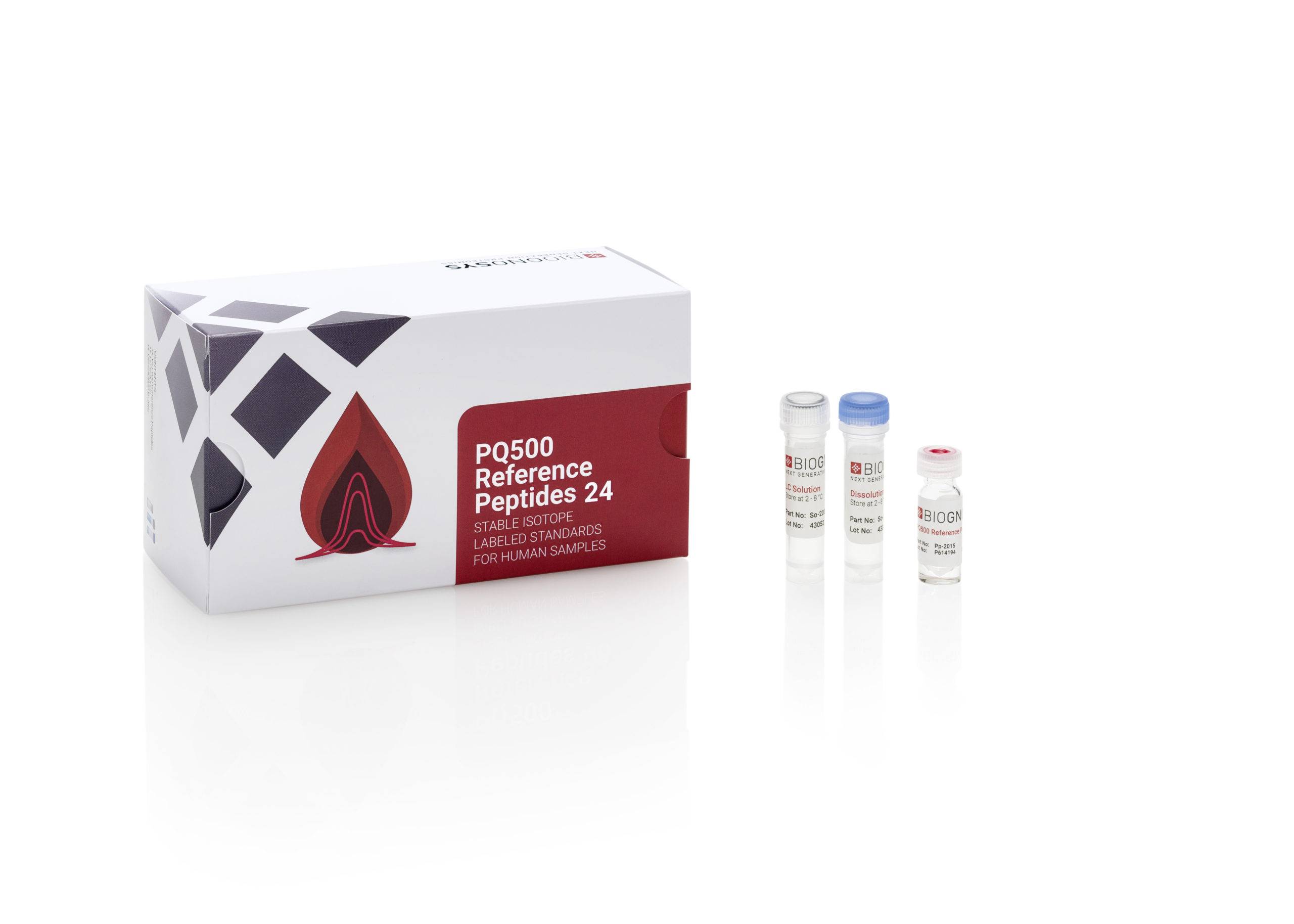
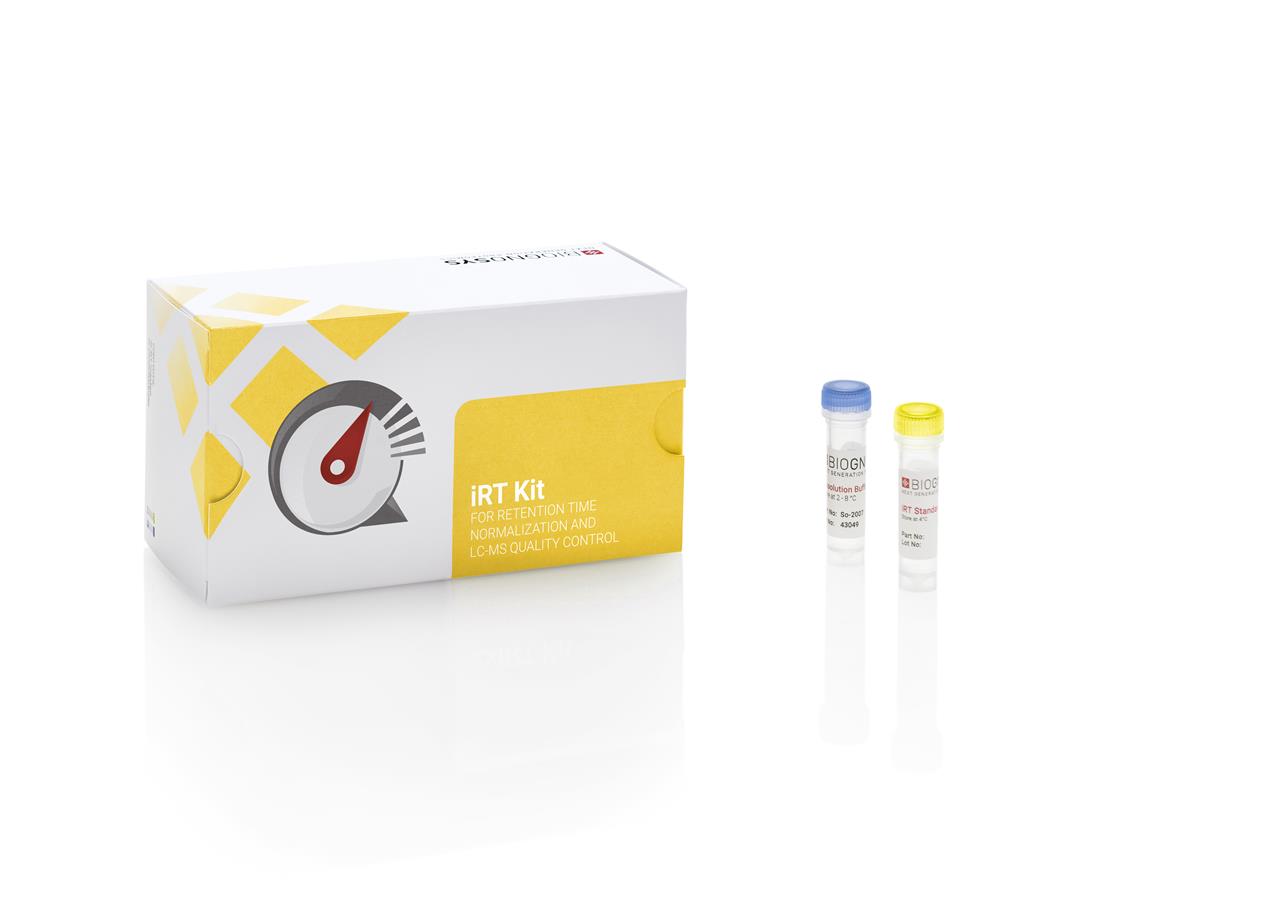
Spectronaut® is a commercial software package aimed at analyzing data-independent acquisition (DIA) proteomics experiments. Spectronaut® can quantitatively profile 100s to several 1,000s of proteins in one experiment. Large experiments with several conditions and replicates consisting of up to 10,000s of LC-MS runs can be analyzed.
Features:
- Vendor Independent
- Usability
- Complete Workflow
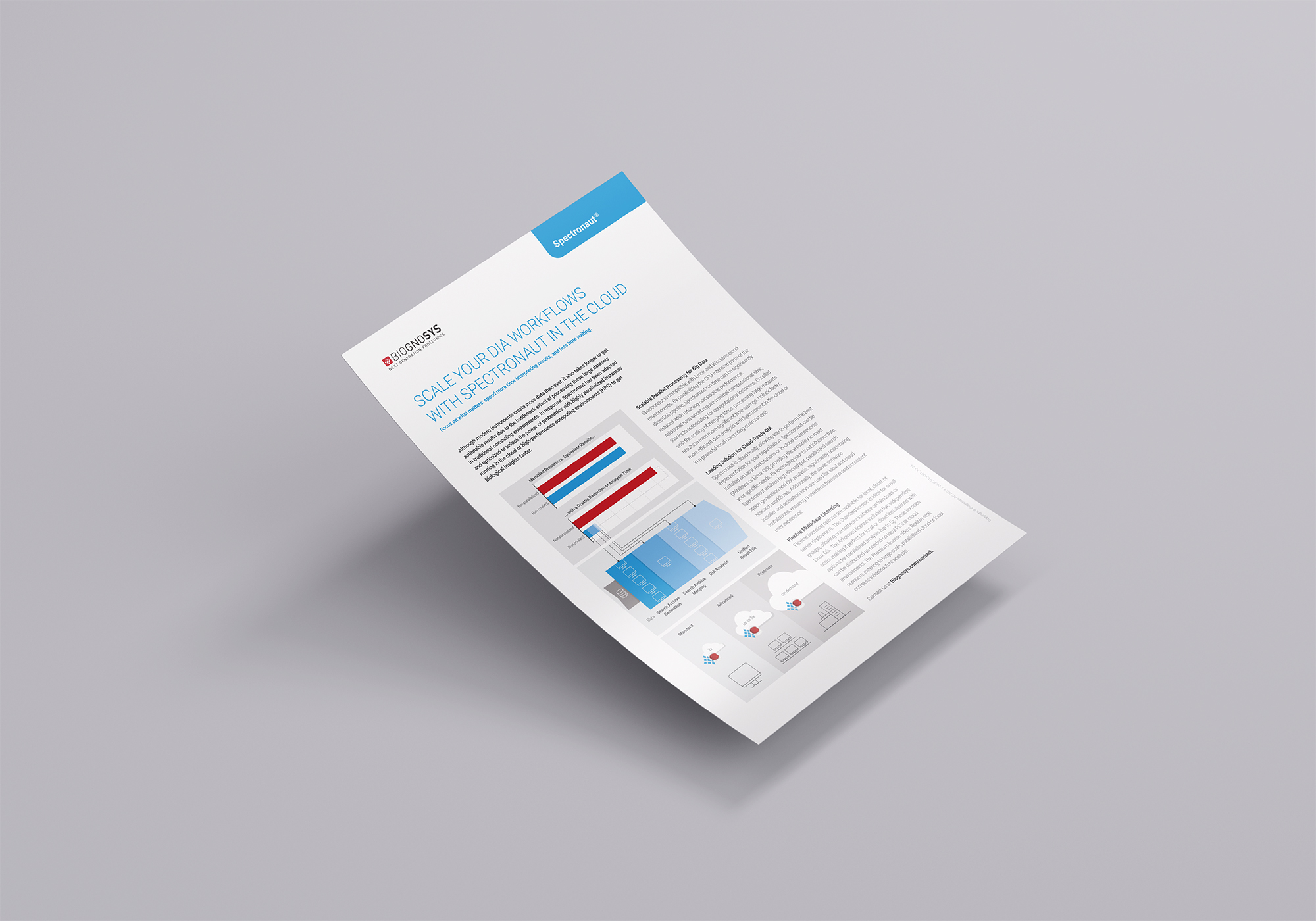
- Performance and Scalability
- Versatility and Flexibility
Check out what’s new in Spectronaut®19.
Spectronaut® is a commercial software package aimed at analyzing data-independent acquisition (DIA) proteomics experiments. Spectronaut® can quantitatively profile 100s to several 1,000s of proteins in one experiment. Large experiments with several conditions and replicates consisting of up to 10,000s of LC-MS runs can be analyzed.
Features:
- Vendor Independent
- Usability
- Complete Workflow
- Performance and Scalability
- Versatility and Flexibility
Check out what’s new in Spectronaut®19.
Spectronaut® is a commercial software package aimed at analyzing data-independent acquisition (DIA) proteomics experiments. Spectronaut® can quantitatively profile 100s to several 1,000s of proteins in one experiment. Large experiments with several conditions and replicates consisting of up to 10,000s of LC-MS runs can be analyzed.
Features:
- Vendor Independent
- Usability
- Complete Workflow
- Performance and Scalability
- Versatility and Flexibility
Check out what’s new in Spectronaut®19.
Spectronaut® is a commercial software package aimed at analyzing data-independent acquisition (DIA) proteomics experiments. Spectronaut® can quantitatively profile 100s to several 1,000s of proteins in one experiment. Large experiments with several conditions and replicates consisting of up to 10,000s of LC-MS runs can be analyzed.
Features:
- Vendor Independent
- Usability
- Complete Workflow
- Performance and Scalability
- Versatility and Flexibility
Check out what’s new in Spectronaut®19.
Spectronaut® is a commercial software package aimed at analyzing data-independent acquisition (DIA) proteomics experiments. Spectronaut® can quantitatively profile 100s to several 1,000s of proteins in one experiment. Large experiments with several conditions and replicates consisting of up to 10,000s of LC-MS runs can be analyzed.
Features:
- Vendor Independent
- Usability
- Complete Workflow
- Performance and Scalability
- Versatility and Flexibility
Check out what’s new in Spectronaut®19.
Supported Instruments
- Thermo Scientific™ Orbitrap Astral
- Thermo Scientific™ Orbitrap Exploris™ 480
- Thermo Scientific™ Q Exactive™ Series
- Thermo Scientific™ Orbitrap Fusion™ Series
- Bruker timsTOF™ Pro series and timsTOF HT
- Bruker timsTOF™ SCP and timsTOF Ultra series
- Bruker timsTOF™ Flex Bruker Impact II
- SCIEX ZenoTOF 7600 System
- SCIEX TripleTOF® Series
- Waters Xevo® G2-XS
Supported Methods
- HRM™
- dia-PASEF®
- SWATH™
- Zeno SWATH
- BoxCar DIA
- SONAR™
- WiSIM-DIA
Methods should acquire MS1 and MS2 or MS2 only scans. The cycle time of the method should be in the range of 1-3 seconds depending on your average peak width. Fractionation, including gas-phase fractionation, is supported.
Recommended System Requirements*
- Windows 10 x64 / Windows Server 2016 or later
- Intel or AMD CPU with 4 cores or more
- 2 TB of free hard drive space or more (2x data set size)
- 16 GB of memory or more (1 precursor in 1 run amounts to ~0.5 KB of RAM)
*for a library-free experiment with 200 DIA runs and typical search space settings
If you are interested in ordering one of our software, please submit a request form or contact us. Our team will review your inquiry and get back to you within 5 working days.




- About
- Spectronaut software – aim and principles
- Workflows available in the software
- Compatibility
- Newest release - Spectronaut 19
- Supported data
- Workstation and setup for Spectronaut
- Accessing Spectronaut
- Getting the license
- Software trial
- Viewer
- Getting Help
- Getting further help
- Introduction and tutorials to Spectronaut